
Introduction
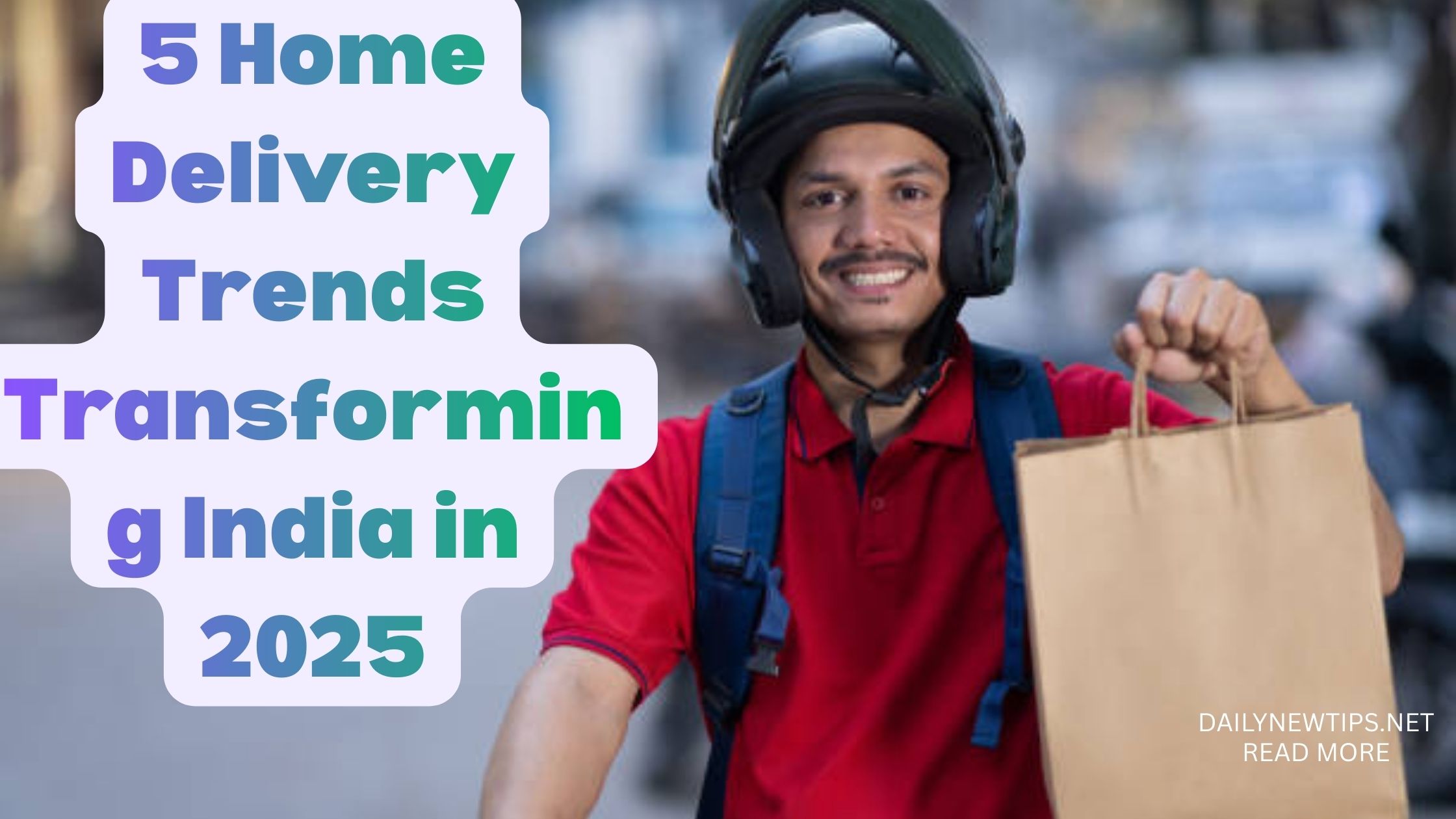
5 Home Delivery Trends Transforming India in 2025
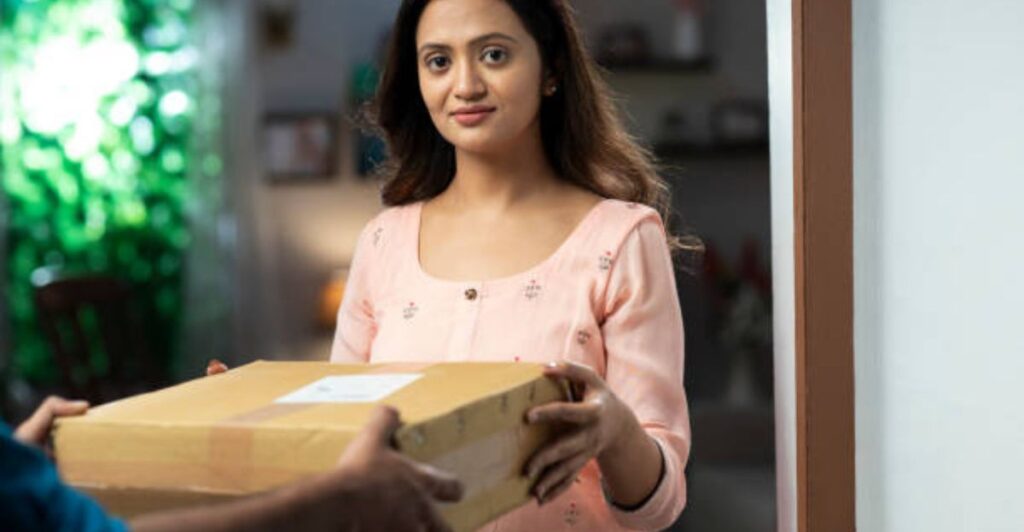
Home delivery in India has grown from a convenience to a necessity. With rapid digital transformation, AI-driven logistics, and changing customer expectations, home delivery services in 2025 are smarter, faster, and more personalized than ever before. From groceries and medicines to furniture and electronics, almost everything now arrives at your doorstep with just a few taps. This article explores the top 5 home delivery trends reshaping the Indian market in 2025 and how customers can make the most of these innovations.
Top 5 Home Delivery Trends in 2025

1. Hyperlocal Delivery Growing Faster Than Ever
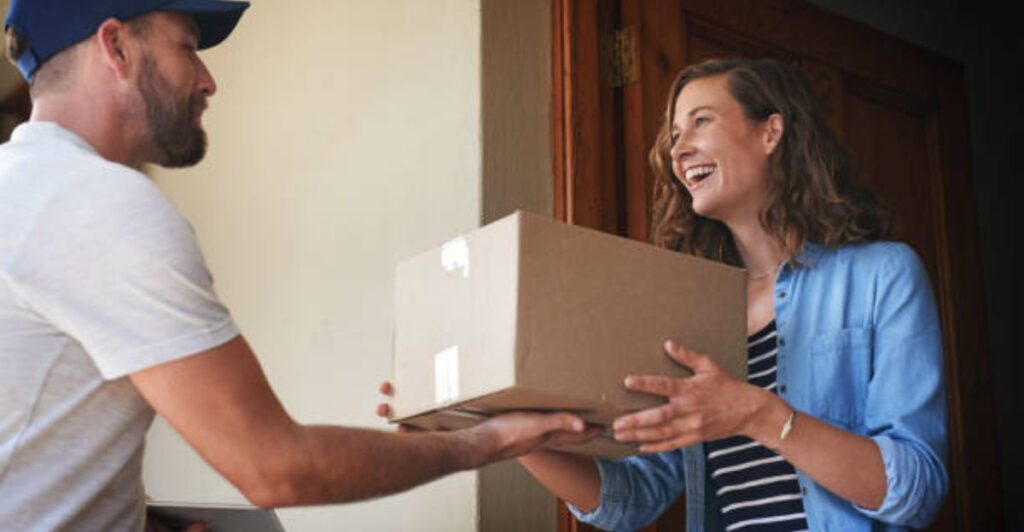
Cities across India are witnessing a boom in hyperlocal delivery apps that promise 15–30 minute delivery for essentials.
- Neighborhood stores are becoming digital partners.
- Real-time inventory syncing reduces delays.
- Demand for instant groceries, snacks, and medicines is at an all-time high.
2. AI-Powered Logistics for Ultra-Fast Delivery
In 2025, AI is optimizing every stage of delivery:
- Smart routing reduces travel time.
- Automated warehouses improve order accuracy.
- Predictive analytics helps apps deliver even during rush hours.
3. Drone and EV Deliveries Expanding Rapidly
To reduce pollution and speed up delivery, companies are shifting to electric vehicles (EVs) and experimental drones.
- EV fleets cut operational costs.
- Drone delivery trials are active in major metro cities.
- Eco-friendly logistics boost brand reputation.
4. Subscription-Based Delivery Plans Rising in Popularity
For frequent shoppers, subscription plans offer:
- Unlimited free deliveries
- Priority slots
- Lower service fees
- Personalized offers
This trend is especially popular among families and working professionals.
5. Seamless Cashless Payments and Secure Delivery Tech

Digital payments are now the default mode for most home deliveries. In addition:
- OTP-based secure handovers ensure safe package reception.
- UPI Autopay makes recurring orders effortless.
- Digital tracking and AI chatbots enhance customer support.
Tips for Making the Most of Home Delivery Services

- Choose apps with real-time tracking and 24/7 support.
- Opt for subscription plans if you order frequently—it saves money long-term.
- Use cashless payments to avoid delays.
- Schedule deliveries during non-peak hours for faster service.
- Compare delivery charges across apps before placing orders.
Trending Now in 2025
- Dark stores are expanding to ensure ultra-fast deliveries.
- Tier 2 and Tier 3 cities are seeing major home delivery growth.
- AI-based customer service bots are replacing traditional support teams.
- Eco-friendly packaging is gaining huge acceptance.
- Food and grocery delivery are merging into single super apps.
Suggestions for Best Results
- Maintain updated address details for smooth delivery.
- Enable app notifications to track order movement.
- Choose apps with high customer ratings and consistent service.
- Check packaging before accepting the order.
- Use loyalty programs to save money on repeated orders.
Conclusion
India’s home delivery ecosystem is evolving rapidly, driven by technology, consumer demand, and smarter logistics. The year 2025 marks a major shift toward faster, greener, and more personalized delivery experiences. By staying updated on the latest trends and using the right strategies, customers can enjoy seamless convenience at their doorstep every day.
References
- Reports on India’s Hyperlocal Delivery Market (2024–2025)
- Government of India EV & Drone Technology Updates
- Digital Payments and UPI Growth Reports (NPCI, 2024)
- Consumer Behavior Insights from E-commerce Surveys (2024)
FAQs
1. Which areas in India are seeing the fastest growth in home delivery?
• Tier-2 and Tier-3 Cities (Non-Metro / “Bharat” Markets)
- According to a 2025 report by a logistics-intelligence firm, non-metro cities (Tier 2 + Tier 3) accounted for nearly three-quarters (~75%) of total e-commerce orders in India during the festive season. Tier 3 cities alone contributed around 50.7% of all orders. Business Standard+2Business Times India+2
- A recent study by a real-estate/warehousing consultancy shows that the boom in e-commerce has triggered major warehousing and logistics expansion in Tier-II and Tier-III cities — making them key new hubs for home delivery services. ETRetail.com+2The Economic Times+2
- For example, cities like Jaipur, Coimbatore, Nagpur, Lucknow and Surat are explicitly mentioned as newer zones where “10-minute” / hyperlocal delivery networks are expanding rapidly. The Economic Times+1
- Smaller towns and semi-urban areas are becoming increasingly important as delivery demand grows — thanks to rising internet & smartphone penetration, increasing purchasing power, and better logistics infrastructure. India Brand Equity Foundation+1
• Cities Beyond Traditional Big Metros — Growth in Urban + Semi-Urban Hubs
- While metros still matter, many delivery-service companies are focusing on “next-wave” urban centres outside the top tier. This includes cities from across states where e-commerce infrastructure (warehouses, dark stores, delivery networks) is being built. The Economic Times+2The Economic Times+2
- As logistics networks expand, many previously under-served areas are starting to get access to faster, more reliable delivery. This expansion is helping shift demand from just metro zones to broader India. foodandbeveragetimesasia.com+1
🧭 Why These Areas Are Growing Fast in Delivery Demand
- Increasing digital adoption — More people in Tier-2/3 towns now have smartphones, data access and comfort with online shopping. India Brand Equity Foundation+1
- Rising disposable income & lifestyle aspirations — People outside metros are buying products beyond basics (fashion, home décor, electronics), which fuels demand. The New Indian Express+1
- Improved logistics & warehousing infrastructure — Companies are building dark stores, micro-fulfillment centers, and last-mile delivery networks even in smaller cities. The Economic Times+1
- Cost-effectiveness for delivery companies — Smaller cities often require fewer orders per day to break even compared to metros, making them attractive for expansion. foodandbeveragetimesasia.com+1
- Change in shopping behaviour — Growing comfort with online ordering, even for non-essential items, among residents of smaller towns. The Times of India+1
🎯 What This Means for Consumers (Including in Smaller Towns and Semi-Urban Areas)
- If you live outside major metros — even in Tier-2 / Tier-3 towns — you’re more likely than before to get reliable home delivery services.
- Delivery times are improving steadily, sometimes offering rapid or “hyperlocal” delivery (especially for groceries, essentials).
- A wider variety of products — not just essentials, but lifestyle, fashion, home décor — are becoming available online even in smaller cities.
- As logistics expand, competition among companies can result in better prices, faster services, and more convenience for consumers everywhere (not just in big cities).
✅ Conclusion
While historically home delivery was dominated by big metros, 2024–2025 marks a key shift: growth is now being driven largely by Tier-2 and Tier-3 cities, small towns, and smaller urban hubs. With expanding logistics infrastructure and rising digital adoption outside metros, delivery growth is fastest in non-metro, mid-size and smaller cities.
2. Are drone deliveries available everywhere?
no, drone deliveries are not available everywhere (at least not yet). Whether you’ll get drone delivery depends heavily on your city, neighborhood, and whether the service provider operates there. Here’s a clearer breakdown of the situation (as of 2025).
✅ Where drone deliveries are available now (or starting soon)
- In India, Skye Air — a drone-delivery company — is already offering commercial drone delivery service in some areas of Gurugram (in the NCR) and Bengaluru (in select postal-code areas). APAC Media+2The Economic Times+2
- The service is not yet city-wide; for example, in Bengaluru, it currently works only in limited areas such as Konankunte and Kanakapura Road. www.ndtv.com+2Hindustan Times+2
- Drone delivery is typically for small parcels (up to a certain weight, e.g. 10 kg in some cases) and along pre-approved “air corridors.” www.ndtv.com+2Logistics Insider+2
🚫 Why drone delivery is still limited — not “everywhere”
- Infrastructure: Drone delivery requires specialized infrastructure — designated flight corridors, take-off/landing zones, secure “mailboxes” or drop points, regulatory permissions. ETCIO.com+2Logistics Insider+2
- Regulatory & Safety Constraints: Airspace regulations, especially around dense urban or sensitive zones (near airports, restricted zones), limit where drones can operate. The Week+2Business Standard+2
- Limited Roll-out: Companies are expanding gradually — starting in major cities and certain neighbourhoods only. Expansion to more cities (or rural areas) is planned, but not yet complete. MillenniumPost+2Logistics Insider+2
- Technical Constraints: Drone payload limits (weight / size), weather sensitivity, and challenges with “last-mile” delivery (i.e. actual hand-over at your home) make universal drone delivery difficult right now. Intel Market Research+1
🔎 What this means for many people (especially outside major metros)
- If you live in a major metro or a city where drone-delivery companies operate, there’s a chance you may access the service — but likely only if your area is covered (pincode / zone).
- If you live in a smaller town, rural area, or outside the coverage zone — drone delivery may not be available yet; standard road-based delivery remains the main option.
- Even in covered cities, you may need to check whether your specific locality or postcode is supported.
🧭 Bottom Line
Drone deliveries are still in early rollout phase. They are available — but only in select areas of certain cities, not “everywhere.” As regulators and companies expand infrastructure, more zones may become eligible.
3. Do subscription delivery plans really save money?
Yes. Regular users can save significantly on delivery charges and get priority delivery slots.
4. Why are hyperlocal deliveries becoming so popular?
They offer ultra-fast delivery of daily essentials, making them perfect for busy households.
5. Is home delivery safe in 2025?
Yes, home delivery is very safe in 2025—even safer than in previous years—thanks to improved technology, better regulations, and more secure delivery practices. Here’s why:
✅ 1. OTP-Based Secure Handovers
Most platforms now use one-time passwords or in-app confirmation to ensure the package is received only by the right person.
✅ 2. Real-Time Tracking
Customers can track the delivery partner’s movement live on the app, reducing the chances of misdelivery or theft.
✅ 3. Verified Delivery Partners
Delivery personnel undergo background checks, identity verification, and onboarding training, adding an extra layer of trust.
✅ 4. Digital Payments for Safety
With UPI and online payments being the norm, cash handling risks are minimized.
✅ 5. Contactless Delivery Options
Still popular in 2025, contactless delivery helps maintain hygiene and minimizes interaction.
✅ 6. Secure Packaging & Tamper-Proof Seals
Food, medicines, and valuable items often come with tamper-evident seals to ensure the item hasn’t been altered.
✅ 7. In-App Support & AI Alerts
AI monitors unusual delivery patterns and can alert the customer instantly if anything seems suspicious.